Deoria is an important district in eastern Uttar Pradesh, located near the Bihar border. The district is known for its fertile agricultural land, religious traditions, historical places and connection with the wider Gorakhpur region.
Deoria city is the district headquarters. Agriculture is the main economic activity, while trade, small businesses, education, healthcare and transport also contribute to the local economy.
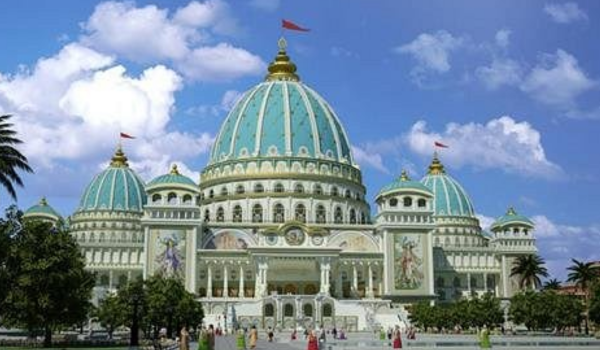
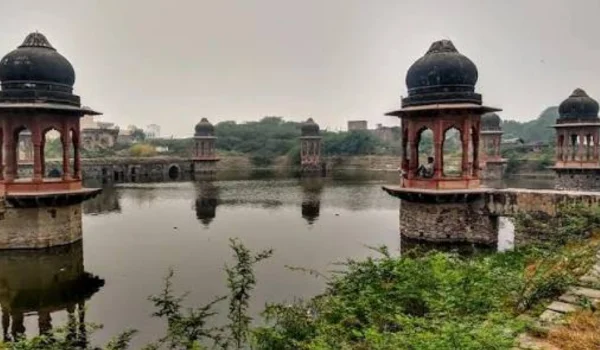
The district has several religious and cultural attractions, including Deoraha Baba Ashram, Somnath Temple at Mahen, Dudheshwar Nath Temple and the historical areas around Rudrapur.
Quick Information About Deoria District
| Particular | Details |
| District | Deoria |
| State | Uttar Pradesh |
| District Headquarters | Deoria |
| Division | Gorakhpur Division |
| Formation | 1946 |
| Area | About 2,540 sq. km |
| Population | 30,98,637 (Census 2011) |
| Main Language | Hindi |
| Major Rivers | Ghaghara, Rapti and Chhoti Gandak |
| Famous For | Agriculture, religious heritage and fertile plains |
| Important Towns | Deoria, Rudrapur, Salempur, Bhatpar Rani and Barhaj |
| Major Economic Activities | Agriculture, dairy, trade, services and small businesses |
Important PIN Codes in Deoria District
Different towns, villages and post offices in Deoria district have separate PIN codes.
| Area / Town | PIN Code |
| Deoria | 274001 |
| Rudrapur | 274204 |
| Salempur | 274509 |
| Barhaj | 274601 |
| Bhatpar Rani | 274702 |
| Lar | 274502 |
| Gauri Bazar | 274202 |
| Bhaluani | 274122 |
| Pathardeva | 274404 |
| Rampur Karkhana | 274405 |
Deoria city, the district headquarters, uses PIN code 274001. PIN codes can vary between nearby villages and individual post offices, so the exact locality should be checked before using a PIN code for postal or official purposes.
Important Facts About Deoria District
Some useful facts about Deoria include:
- Deoria is located in eastern Uttar Pradesh.
- Deoria city is the district headquarters.
- The district is part of Gorakhpur Division.
- Deoria was separated from Gorakhpur district in 1946.
- The district shares a border with Bihar.
- Agriculture is the main source of livelihood for many residents.
- Rice, wheat and sugarcane are important crops.
- Dairy farming and livestock activities are also important.
- The district has a large rural population.
- Rudrapur, Salempur, Barhaj and Bhatpar Rani are important towns.
- The district has several Hindu religious sites and local pilgrimage centres.
- The Ghaghara River forms part of the district’s wider river system.
- Deoria has road and railway connectivity with Gorakhpur, Uttar Pradesh and Bihar.
- Gorakhpur is an important nearby commercial and transportation centre.
Location and Geography of Deoria
Deoria is situated in the eastern part of Uttar Pradesh.
The district is surrounded by:
- Kushinagar towards the north
- Gorakhpur towards the west
- Mau and Azamgarh towards the southwest
- Bihar towards the east and southeast
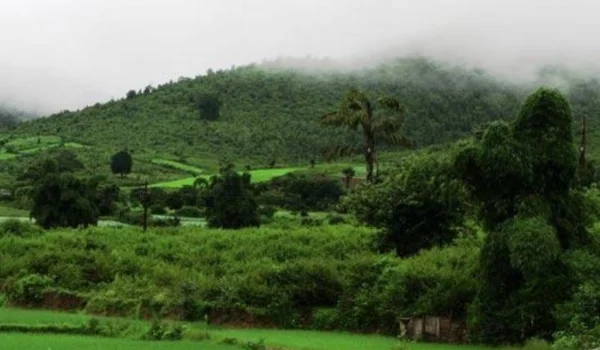
The district consists mainly of fertile plains.
Its geography includes:
- Agricultural fields
- River plains
- Rural settlements
- Wetlands
- Small water bodies
The fertile alluvial soil supports agriculture across much of the district.
History of Deoria District
Deoria has a long history connected with the ancient Gorakhpur and eastern Uttar Pradesh region.
The wider area has been influenced by several ancient kingdoms and religious traditions.
Ancient and Medieval Connections
The region around Deoria was historically connected with important centres of eastern Uttar Pradesh.
Local traditions also associate parts of the region with stories from the Ramayana and other Hindu traditions.
Over the centuries, the area came under different rulers and administrative systems.
Formation of the District
Deoria became a separate district in 1946, when it was separated from Gorakhpur district.
Since then, Deoria has developed as an important administrative and agricultural centre in eastern Uttar Pradesh.
Population of Deoria District
According to the 2011 Census, Deoria district had a population of approximately 30.99 lakh.
A significant majority of the population lives in rural areas.
Important population and commercial centres include:
- Deoria
- Rudrapur
- Salempur
- Barhaj
- Bhatpar Rani
- Lar
Economy of Deoria District
Deoria has a predominantly agricultural economy.
Major sectors include:
- Agriculture
- Dairy
- Livestock
- Food processing
- Retail
- Transport
- Construction
- Small businesses
- Government services
Deoria’s proximity to Gorakhpur and Bihar supports regional trade.
Agriculture in Deoria District
Agriculture is the backbone of the district economy.
Major crops include:
- Rice
- Wheat
- Sugarcane
- Pulses
- Oilseeds
- Vegetables
- Maize
Farmers also engage in:
- Dairy farming
- Cattle rearing
- Poultry
- Other livestock activities
The fertile plains and availability of irrigation support agricultural production.
Industries and Business in Deoria District
Deoria does not have a highly industrialised economy, but several small and medium businesses operate in the district.
Important activities include:
- Rice mills
- Flour mills
- Sugar-related businesses
- Dairy
- Food processing
- Agricultural trading
- Retail
- Transport
- Construction
There is also potential for agro-processing because of the district’s large agricultural base.
Education in Deoria District
Deoria has schools, colleges and higher education institutions.
Important education centres include:
- Deoria
- Rudrapur
- Salempur
- Barhaj
The district offers education in:
- Arts
- Science
- Commerce
- Education
- Technical subjects
- Professional courses
Students can also access larger higher-education centres in nearby Gorakhpur.
District Court in Deoria
Deoria has a District and Sessions Court serving the judicial requirements of the district.
The district judiciary deals with:
- Civil cases
- Criminal cases
- Family matters
- Other legal proceedings
The district court is located in Deoria city.
District Hospital and Healthcare
Deoria has government and private healthcare facilities.
Healthcare infrastructure includes:
- District-level government hospital
- Government hospitals
- Community Health Centres
- Primary Health Centres
- Private hospitals
- Clinics
- Diagnostic centres
The District Hospital, Deoria is an important government healthcare facility for local residents.
For highly specialised treatment, residents may travel to Gorakhpur, which has larger medical institutions and specialised hospitals.
Popular Tourist Attractions in Deoria District
Deoria is better known for religious and cultural tourism than for large conventional tourist attractions.
- Deoraha Baba Ashram
Deoraha Baba Ashram is associated with the spiritual figure Deoraha Baba.
The site attracts devotees and visitors interested in spirituality and local religious traditions.
- Somnath Temple, Mahen
The Somnath Temple at Mahen is a notable religious site in the district.
It is associated with Lord Shiva and attracts local devotees, particularly during important Hindu festivals.
- Dudheshwar Nath Temple
The Dudheshwar Nath Temple is another important Shiva temple in the region.
Devotees visit the temple throughout the year, with larger gatherings during Maha Shivaratri and other religious occasions.
- Rudrapur
Rudrapur is an important town in Deoria district with several religious and cultural sites.
The town also serves as a local commercial centre.
- Barhaj
Located near the Ghaghara River, Barhaj has religious significance and is known for its riverfront environment and local temples.
The area is particularly active during religious festivals.
Religious and Cultural Heritage
Religion plays an important role in the cultural life of Deoria.
Important religious traditions include:
- Shaivism
- Vaishnavism
- Shakti worship
- Local village traditions
Important festivals include:
- Diwali
- Holi
- Dussehra
- Navratri
- Maha Shivaratri
- Ram Navami
- Janmashtami
- Chhath Puja
Because Deoria is close to Bihar, Chhath Puja is also an important festival in many communities.
Transport and Connectivity
Deoria has good road and railway connections with eastern Uttar Pradesh and neighbouring Bihar.
Road Connectivity
Roads connect Deoria with:
- Gorakhpur
- Kushinagar
- Mau
- Azamgarh
- Varanasi
- Bihar
The district’s location makes it an important regional transport centre.
Railway Connectivity
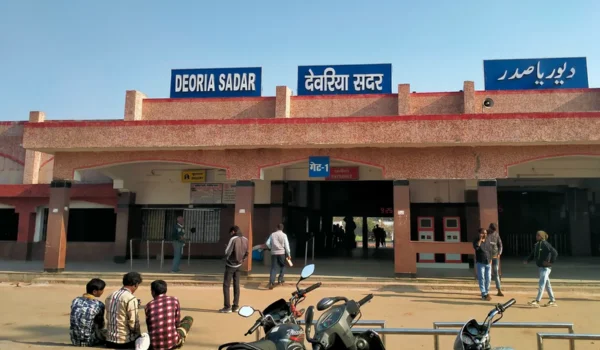
Deoria Sadar railway station is the main railway station serving the district headquarters.
Other important railway stations include:
- Salempur Junction
- Bhatni Junction
- Barhaj Bazar
Railway connections provide access to Gorakhpur, Varanasi, Lucknow, Delhi, Bihar and other parts of North India.
Air Connectivity
The nearest major airport is Kushinagar International Airport, while Gorakhpur Airport is another important option.
Travellers can choose between the two depending on flight availability and destination.
Best Time to Visit Deoria
The best time to visit Deoria is generally October to March.
The cooler months are suitable for:
- Temple visits
- Religious tourism
- Local sightseeing
- Cultural exploration
Summer can be hot, while monsoon months may bring heavy rainfall and occasional waterlogging in low-lying areas.
Nearby Cities, Districts and Areas
Important nearby places include:
- Gorakhpur
- Kushinagar
- Mau
- Azamgarh
- Varanasi
- Siwan
- Gopalganj
- Chapra
Deoria’s location near the Uttar Pradesh–Bihar border gives it importance in regional trade and transportation.
Why Is Deoria District Important?
Deoria is important because of its agricultural economy, fertile plains, religious heritage and strategic location near Bihar.
Its major strengths include:
- Strong agricultural base
- Rice and wheat production
- Sugarcane cultivation
- Dairy and livestock
- Religious tourism
- Railway connectivity
- Proximity to Gorakhpur
- Border connectivity with Bihar
The district has potential for agro-processing, dairy businesses, food processing, logistics, retail and religious tourism.
FAQs About Deoria District
- What is Deoria district famous for?
Deoria is known for its agriculture, religious heritage, fertile plains, dairy activities and location near the Uttar Pradesh–Bihar border.
- What is the district headquarters of Deoria?
Deoria city is the district headquarters.
- What is the PIN code of Deoria?
The main PIN code of Deoria is 274001. Other towns and villages have different PIN codes.
- When was Deoria district formed?
Deoria became a separate district in 1946, after being separated from Gorakhpur district.
- What are the popular tourist places in Deoria?
Popular religious and cultural attractions include Deoraha Baba Ashram, Somnath Temple at Mahen, Dudheshwar Nath Temple, Rudrapur and Barhaj.
- Does Deoria have a district court and district hospital?
Yes. Deoria has a District and Sessions Court and a District Hospital, along with community health centres, primary health centres and private healthcare facilities.
Conclusion
Deoria District is an important agricultural and administrative region of eastern Uttar Pradesh. Its fertile plains support rice, wheat, sugarcane and other crops, while dairy and livestock activities provide additional rural employment.
The district also has a strong religious and cultural identity, with places such as Deoraha Baba Ashram, Somnath Temple and Dudheshwar Nath Temple attracting devotees. Its railway and road connectivity, combined with its proximity to Gorakhpur and Bihar, gives Deoria an important regional role.
With opportunities in agriculture, food processing, dairy, logistics, retail and religious tourism, Deoria has considerable potential for future local economic development.