Banka District is located in the south-eastern part of Bihar and shares its southern and eastern boundaries with Jharkhand. The district is known for its religious heritage, Mandar Hill, agriculture, traditional handicrafts, handloom activities and the famous Bounsi Mela.
Banka town is the district headquarters. The district has a largely rural and agriculture-based economy, while places such as Mandar Hill, Papharni, Jethor Nath Temple and Chuteshwar Nath Temple give it importance as a religious and cultural destination.
Quick Information About Banka District
| Particular | Details |
| District | Banka |
| State | Bihar |
| District Headquarters | Banka |
| Formation | 21 February 1991 |
| Area | About 3,020 sq. km. |
| Population | 20,34,763 (Census 2011) |
| Literacy Rate | 58.17% |
| Administrative Subdivision | Banka |
| Blocks | 11 |
| Main Languages | Hindi and local regional languages |
| Major Rivers | Chandan and local river systems |
| Famous For | Mandar Hill, Bounsi Mela, agriculture and religious heritage |
| Important Towns | Banka, Amarpur, Bounsi and Katoria |
Banka was established as a separate district on 21 February 1991. Before that, it was a subdivision of Bhagalpur district. The district currently has 11 blocks, all under the Banka subdivision.
Important PIN Codes in Banka District
PIN codes are useful for postal communication, official documents, banking, deliveries and identifying local post offices. Some important PIN codes in Banka district include:
| Area / Town | PIN Code |
| Banka | 813102 |
| Amarpur | 813101 |
| Barahat | 813103 |
| Bounsi | 813104 |
| Belhar | 813202 |
| Katoria | 814131 |
| Chandan | 814131 |
| Dhoraiya | 813201 |
| Rajoun | 813107 |
| Fullidumar | 813202 |
| Sambhuganj | 813211 |
PIN codes can differ between towns, villages and individual post offices. For official correspondence, the exact locality and post office should be confirmed.
Important Facts About Banka District
Here are some useful facts that make Banka distinctive:
- Banka is located in the south-eastern part of Bihar.
- The district was established on 21 February 1991.
- Banka town is the district headquarters.
- The district shares borders with Jharkhand.
- Mandar Hill is the best-known geographical and religious landmark.
- Mandar Hill is associated with the Hindu legend of Samudra Manthan.
- The famous Bounsi Mela is held every January near Mandar Hill.
- Banka has a predominantly agriculture-based economy.
- Major crops include rice, wheat, maize and lentils.
- Amarpur is known for sugarcane cultivation and gur-related activities.
- Katoria is associated with silk cocoon production.
- The district has important Hindu and Jain religious sites.
- Banka has a rich tradition of handloom, khadi, silk and handicrafts.
- The district has 11 administrative blocks.
- Banka has road and railway connections with Bhagalpur, Jasidih and Deoghar.
Location and Geography
Banka is situated in the south-eastern part of Bihar. It occupies a transition zone between the plains of Bihar and the adjoining upland areas of Jharkhand.
The district shares boundaries with:
- Godda district, Jharkhand towards the east and south
- Deoghar district, Jharkhand towards the south-east
- Jamui district towards the west
- Munger district towards the north-east
- Bhagalpur district towards the north
Important geographical features include:
- Mandar Hill
- Chandan River
- Low hills and rocky areas
- Agricultural plains
- Forested patches
- Rural landscapes
- Water bodies and ponds
The district has a varied landscape, with cultivated plains in many areas and hill regions particularly around Bounsi and Katoria.
History of Banka District
Banka has a long historical and cultural background. Its history is closely connected with the wider history of Anga, Bhagalpur and south-eastern Bihar.
Ancient History
The wider region formed part of the ancient Anga cultural area. The area around present-day Bhagalpur and adjoining districts was an important centre of ancient eastern India.
Banka’s most famous historical and religious landmark, Mandar Hill, has a strong place in Hindu traditions. According to religious tradition, Mandar is associated with the Samudra Manthan, or churning of the cosmic ocean.
The hill has also been important to Jain religious traditions. Jain temples at the summit are associated with Lord Vasupujya.
Medieval Period
During the medieval period, the region was influenced by several ruling dynasties and political powers that controlled eastern Bihar.
Mandar and surrounding settlements continued to develop as religious centres, while agriculture and village settlements remained important to the local economy.
Later History
The region became part of larger administrative units during Mughal and later British rule. Banka remained connected administratively with Bhagalpur for a long period.
Formation of Banka District
Banka became a separate district on 21 February 1991, when it was separated from Bhagalpur district.
Since its formation, Banka has developed its own district-level administrative, educational, agricultural and tourism institutions.
Population of Banka District
According to the 2011 Census, Banka district had a population of 20,34,763.
The district is predominantly rural, with agriculture playing a major role in employment and livelihoods. The population is distributed across villages and smaller urban centres such as Banka, Amarpur, Bounsi and Katoria.
The district’s literacy rate was 58.17% according to the district profile based on Census-era data.
Banka also has a significant tribal and rural cultural presence, particularly in areas closer to the Jharkhand border.
Economy of Banka District
Banka has a predominantly agrarian economy. Agriculture and related activities provide livelihoods to a large part of the population.
Major economic sectors include:
- Agriculture
- Sugarcane cultivation
- Gur and sugar-related activities
- Livestock
- Silk and sericulture
- Handloom
- Khadi
- Traditional handicrafts
- Small-scale industries
- Local trade
- Religious tourism
- Transport and services
The district’s proximity to Jharkhand also gives it connections with the wider mineral and industrial economy of eastern India.
Agriculture in Banka
Agriculture is the backbone of the rural economy of Banka. The district has cultivated plains as well as areas with more varied terrain.
Major crops include:
- Rice
- Wheat
- Maize
- Lentils and other pulses
- Sugarcane
- Oilseeds
- Vegetables
- Seasonal crops
Amarpur is particularly associated with sugarcane cultivation and traditional gur production.
Agricultural markets in Banka and neighbouring districts provide channels for farmers to sell crops and agricultural products.
Handloom and Traditional Industries
Banka has a rich tradition of rural handicrafts, handloom work and textile-related activities.
Silk and Sericulture
Katoria is known for the production of raw silk cocoons. The local sericulture economy is connected with the broader silk industry of the Bhagalpur region.
Khadi and Handloom
Locally produced khadi and silk products are part of the district’s traditional economic identity. Weaving and textile activities provide supplementary income for rural households.
Handicrafts
Bamboo, cane and other locally available materials are used in traditional products. Such activities also have potential for cultural tourism and village-based businesses.
Industries and Business in Banka District
Large-scale industrialisation is limited compared with major industrial districts of Bihar, but Banka has several agriculture-linked and traditional business sectors.
Important sectors include:
- Food processing
- Gur and sugar-related activities
- Rice and grain processing
- Sericulture
- Silk-related activities
- Handloom
- Khadi
- Stone and mineral-related activities
- Small manufacturing
- Retail trade
- Tourism and hospitality
The district’s location near Jharkhand and its connection with Bhagalpur and Deoghar give it opportunities for regional trade and transport-based businesses.
Education in Banka
Education facilities in Banka include government schools, private schools, colleges and higher-education institutions.
Banka town is the main educational and administrative centre. Educational facilities are also available in Amarpur, Bounsi, Katoria and other blocks.
Students from rural areas often travel to Banka, Bhagalpur, Deoghar and other nearby educational centres for higher and professional education.
The district administration also has education-related departments responsible for school infrastructure, teacher administration and government education programmes.
District Court in Banka
The District Court of Banka serves as an important judicial institution for the district.
The district judiciary deals with civil, criminal and other matters falling within its jurisdiction. Subordinate courts and magistrate-level institutions support judicial administration across the district.
Revenue and land-related matters are also handled through the appropriate administrative and revenue authorities.
District Hospital and Healthcare
Banka has government healthcare facilities serving both urban and rural populations.
Important healthcare infrastructure includes:
- District-level government hospital facilities
- Community Health Centres
- Primary Health Centres
- Health sub-centres
- Maternal and child healthcare services
- Immunisation programmes
- Emergency healthcare
- Public-health programmes
- Private hospitals and clinics in major towns
Banka town serves as an important centre for district-level medical and administrative services.
Popular Tourist Attractions in Banka District
Banka is particularly important for religious tourism, heritage tourism and cultural tourism. Mandar Hill is the district’s most prominent attraction.
- Mandar Hill
Mandar Hill, also known as Mandarachal, is the most famous attraction of Banka district.
According to Hindu tradition, the hill is associated with the Samudra Manthan. The hill contains religious sites, temples and sacred ponds and attracts pilgrims throughout the year.
- Papharni
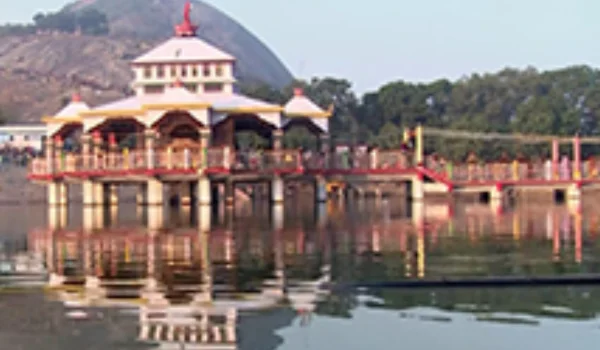
Papharni is a sacred water body located at the foot of Mandar Hill.
The site has temples and religious structures, including the Mahavishnu and Mahalakshmi temple. The area is visited by both Hindu and Jain pilgrims.
- Jain Temples on Mandar Hill
The summit of Mandar Hill has important Jain temples associated with Lord Vasupujya, the 12th Jain Tirthankara.
The site is considered significant in Jain religious tradition and attracts pilgrims from different parts of India.
- Madhusudan Temple
The Madhusudan Temple is an important Vaishnava religious site associated with Bounsi and Mandar.
The annual Rath Yatra of Lord Madhusudan is an important cultural and religious event in the district.
- Bounsi Mela
The Bounsi Mela is one of the best-known fairs of Banka district. It begins around Makar Sankranti in January and is associated with the Mandar region.
The fair combines religious activities, local trade, rural culture, handicrafts and entertainment.
- Jethor Nath Temple
Jethor Nath Temple is a Shiva temple located near a hillock and the Chandan River.
The surrounding hill and religious setting make it an important pilgrimage destination. A fair is organised around the temple during Shivratri.
- Chuteshwar Nath Temple
Chuteshwar Nath Temple is situated in the Sambhuganj area.
The temple is associated with a hill and cave and is an important local religious site. The surrounding landscape adds to its appeal for visitors interested in religious and natural places.
- Lakshdeepa Temple
The Lakshdeepa Temple area is associated with old religious traditions and temple ruins.
It forms part of the wider religious heritage of the Banka region and is of interest to visitors exploring lesser-known historical sites.
- Jethsaur / Jesth Gour Sthan
Jesth Gour Sthan is associated with a Shiva temple situated near the Chandan River.
The hillock also has a Kali temple and an old well. A local fair is held during Shivratri.
- Gauripur and Other Heritage Villages
Villages such as Gauripur contain old temples and structures associated with regional historical traditions.
These locations are useful for travellers interested in rural heritage, traditional architecture and the cultural landscape of Banka.
Transport and Connectivity
Road Connectivity
Banka is connected by road with Bhagalpur, Deoghar, Jasidih, Godda and other parts of Bihar and Jharkhand.
Road travel is especially important for reaching Mandar Hill, Bounsi and other religious destinations within the district.
Railway Connectivity
Banka railway station provides rail connectivity with important destinations. The district is connected by railway with Bhagalpur, Rajendra Nagar and Jasidih Junction through available services.
Jasidih is particularly useful for travellers connecting with the wider railway network of Jharkhand and eastern India.
Air Connectivity
Banka does not have a major commercial airport of its own. Travellers generally use airports in nearby major cities depending on their destination and available flight schedules.
For visitors coming to Mandar and Bounsi, Deoghar Airport can be considered along with other regional airport options, subject to current flight availability and road connectivity.
Best Time to Visit Banka District
The best time to explore Banka is generally from October to March, when the weather is more comfortable for sightseeing and religious travel.
January is particularly important because of the Bounsi Mela and Makar Sankranti celebrations around Mandar Hill.
Good activities include:
- Visiting Mandar Hill
- Exploring Papharni
- Visiting Jain temples
- Attending Bounsi Mela
- Visiting Madhusudan Temple
- Exploring Jethor Nath Temple
- Experiencing local handicrafts and rural markets
Summer temperatures can be high, while the monsoon season may make some rural and hill-area travel more difficult.
Nearby Cities, Districts and Areas
Important nearby cities and districts include:
- Bhagalpur
- Deoghar
- Godda
- Dumka
- Jamui
- Munger
- Jasidih
- Sultanganj
- Jharkhand border areas
Banka’s position between Bihar and Jharkhand gives it importance for regional trade, pilgrimage, agriculture and cultural exchange.
Why Is Banka District Important?
Banka is important because of its combination of religious heritage, agriculture, traditional industries, cultural festivals and geographical proximity to Jharkhand.
Its major strengths include:
- Mandar Hill
- Samudra Manthan religious tradition
- Bounsi Mela
- Jain pilgrimage sites
- Madhusudan Temple
- Agriculture and rice production
- Sugarcane and gur production
- Sericulture and silk
- Khadi and handloom
- Connectivity with Bhagalpur and Jharkhand
The district has strong potential for religious and cultural tourism while agriculture, traditional crafts and rural industries remain important parts of its economy.
FAQs About Banka District
What is Banka district famous for?
Banka is famous for Mandar Hill, Bounsi Mela, religious sites, agriculture, silk-related activities and traditional handicrafts.
When was Banka district formed?
Banka district was established on 21 February 1991 after being separated from Bhagalpur district.
What is the headquarters of Banka district?
The district headquarters is located in Banka town.
How many blocks are there in Banka district?
Banka district has 11 administrative blocks, all under the Banka subdivision.
What is the population of Banka district?
According to the 2011 Census, Banka had a population of 20,34,763.
Which is the most famous tourist place in Banka?
Mandar Hill is the most famous tourist and pilgrimage destination in Banka district.
Why is Mandar Hill important?
Mandar Hill is considered sacred in Hindu tradition because of its association with the Samudra Manthan. It is also important in Jain religious tradition because of the temples associated with Lord Vasupujya.
Conclusion
Banka District is an important district of south-eastern Bihar with a strong combination of religious heritage, agriculture, traditional industries and rural culture. The district’s identity is closely connected with Mandar Hill, Papharni, Bounsi Mela and its Hindu and Jain pilgrimage traditions.
Beyond tourism, Banka has a largely agrarian economy supported by rice, wheat, maize, pulses and sugarcane. Sericulture, silk, khadi, handloom and local handicrafts add to its traditional economic base. Its location near Jharkhand and connectivity with Bhagalpur and Deoghar further strengthen its regional importance.